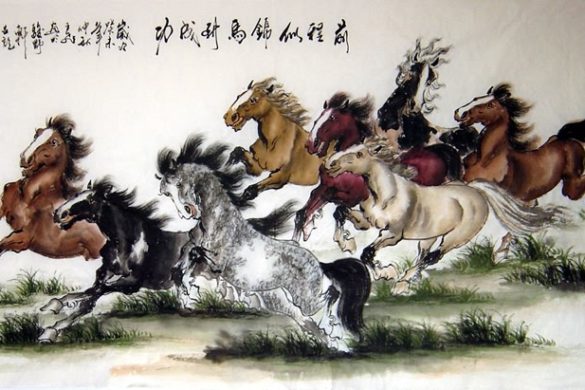
Chinese ink wash painting, or shui mo hua (水墨畫), is a traditional brush-painting technique that uses only diluted black ink “no color” to create landscapes, flowers, birds, and figures. It emerged in the Tang dynasty (618–907) and flourished during the Song dynasty (960–1279), favoring free, expressive brushwork over precise realism. In English it’s also referred to as Chinese ink painting or Chinese brush painting. The style remains a living tradition: many contemporary Chinese artists still use the ink wash technique, reinterpreting it through new subjects and media.
The origin of ink wash painting or as called in Chinese “shui mo hua”
Ink wash painting or the ink wash technic is a type of brush painting that uses black ink – as used in calligraphy – in different concentrations. Emerging in the Tang dynasty in China (618–907) it really flourished later in the Song dynasty (960–1279).
Tradition credits the Tang-dynasty poet-painter Wang Wei with pioneering the technique, though as with much of early Chinese art history, this attribution rests on legend more than documented fact. During the Thang dynasty and after further development, the technique spread to Japan around 1350. The appreciation of Ink painting peaked in popularity among Japanese artists and calligraphers during the Muromachi era (1338-1573).
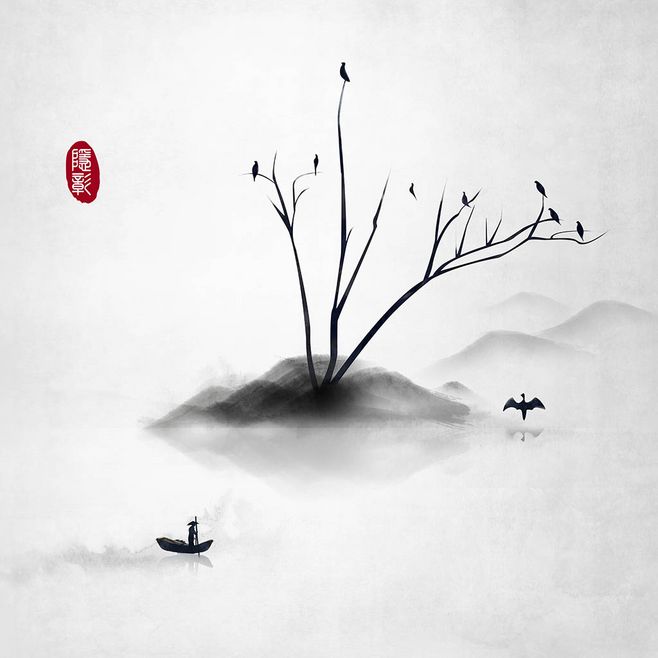
Painting style
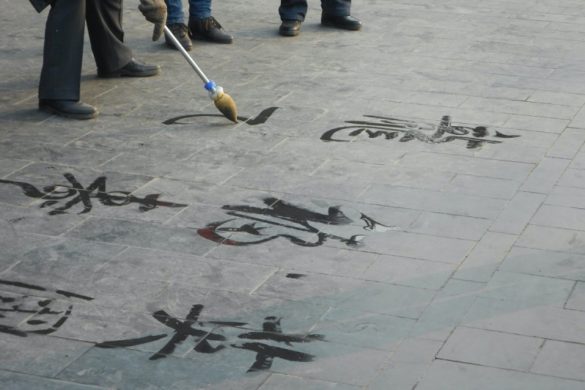
This special drawing technic is created using a brush, dipped into ground ink, then submerged in water before being painted onto a canvas of paper or silk. Because of that the focused and monotone nature of the paintings are created composed of just black and white.
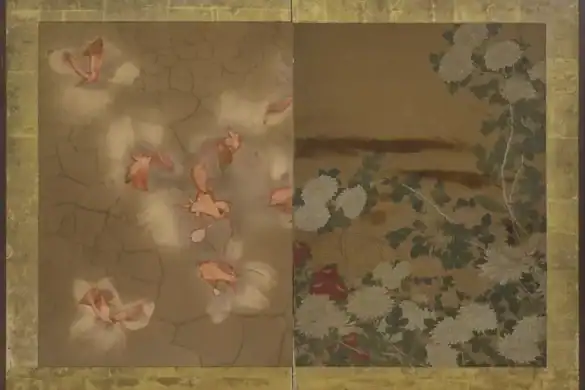
Having developed alongside Chinese calligraphy, ink wash paintings or shui-mo paintings often feature trees, flowers, landscapes, animals, birds and people. Also, they are often accompanied by Chinese poetry. This style was once the traditional style of painting for Eastern people in general and common as well in Japan, Vietnam and Korea.
The paintingstyle does not put high importance on a precise depiction of a real scene or object. As in Calligraphy, the brushstroke in Chinese ink brush painting is less a means of applying ink than a philosophical or emotional statement. They are often improvised works, arising from the artist’s sudden inspiration when observing beautiful scenery. Therefore, this type of painting is hard to copy or reproduce. Sometimes this style is also referred to as Guo Hua painting although that is a much broader description.
Brush, ink, and paper (or silk) are the essential toolkit behind every ink wash painting, and they’re also what separates the style’s two broad schools, xieyi and gongbi, covered next.
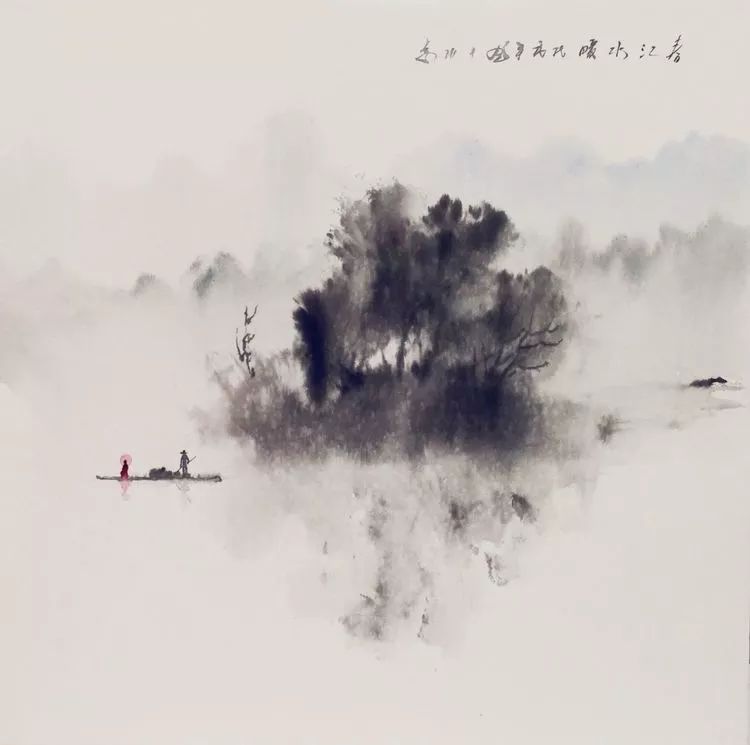
Chinese Ink Painting, Chinese Brush Painting, or Chinese Watercolor Painting?
In English, these three terms get used almost interchangeably online, but they aren’t quite the same thing. “Chinese ink painting” is the broad umbrella covering any brushwork done with ink, monochrome or with added color. “Chinese brush painting” emphasizes the brush technique itself and is often used for both ink wash and colored gongbi work. “Chinese watercolor painting” is mostly a Western search term rather than a Chinese one: Chinese ink and Western watercolor share water as a medium, but traditional ink wash painting uses only black ink diluted to different tones, not the pigment-based color washes of Western watercolor. If a search brought you here for “chinese watercolor,” shui mo hua is very likely what you’re picturing.
Xieyi vs. Gongbi: The Two Traditions Behind Ink Wash Painting
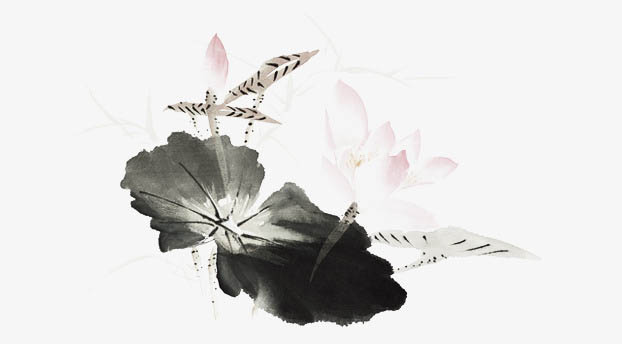
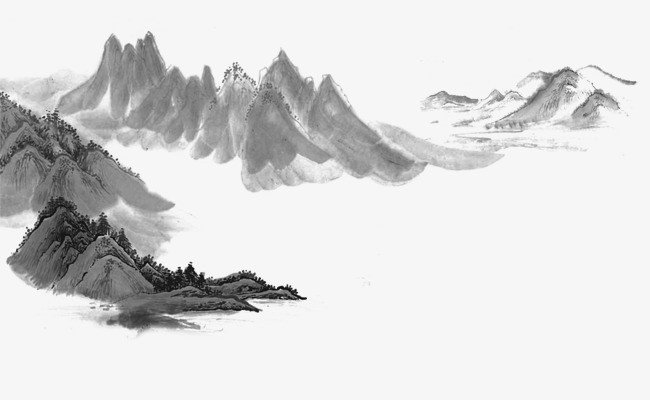
Chinese painting has traditionally been divided into two broad approaches: xieyi (寫意, “sketching thoughts” or “writing meaning”) and gongbi (工筆, “meticulous brush”). Ink wash painting sits firmly in the xieyi camp. Rather than outlining a subject and filling it in, a xieyi artist loads a single brush with graded tones of ink and lays down a handful of confident strokes that suggest a mountain, a lotus leaf, or a bird in flight, leaving empty space to do as much work as the ink itself.
Gongbi is its formal counterpart: fine, controlled outlines built up in careful layers, traditionally used for court portraits, bird-and-flower studies, and narrative scenes, usually finished in color. Where gongbi rewards patience and precision, ink wash painting rewards restraint. A stroke, once made, cannot be corrected, which is part of why the style is so closely tied to spontaneity and personal expression in Chinese art history.
Contemporary ink and wash painting
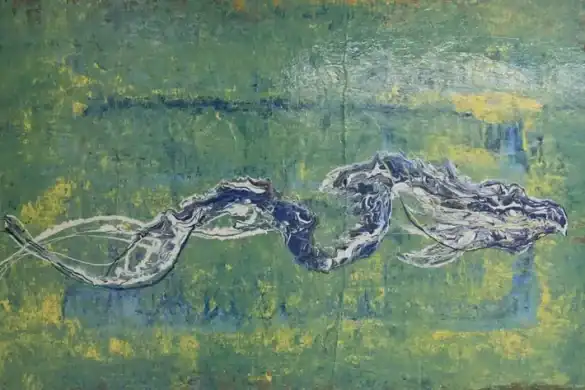
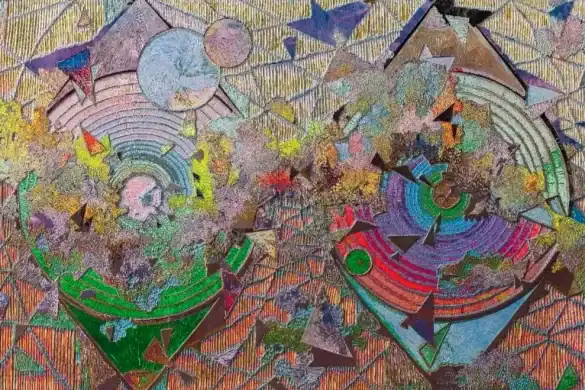
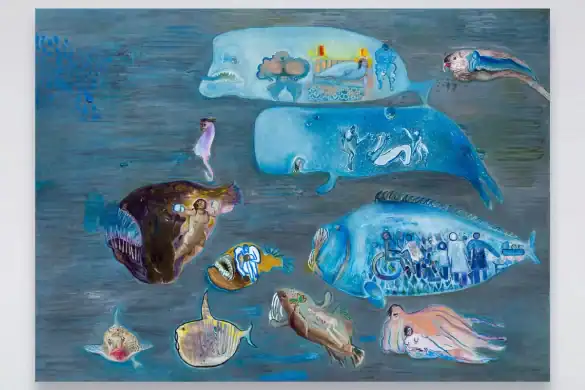
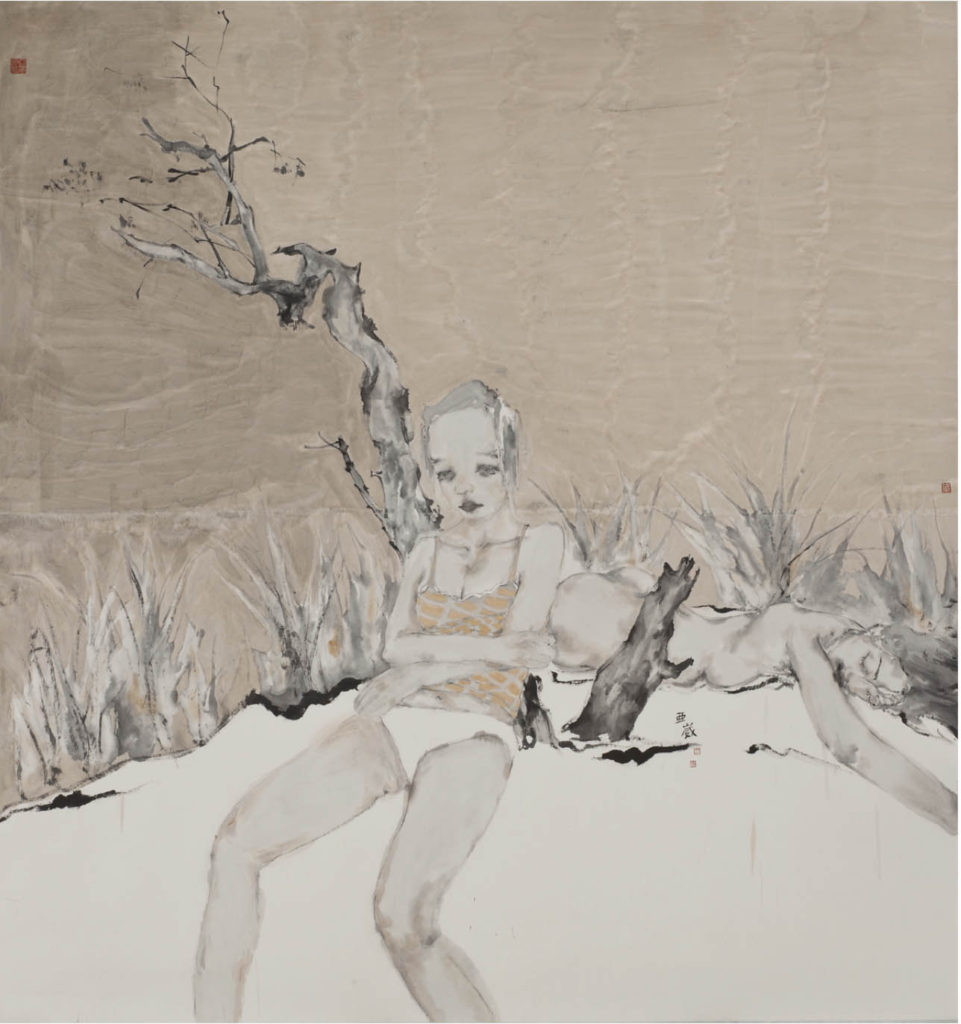
Today there are many new Chinese artists that use the traditional Chinese ink wash technic to draw new sceneries and new pictures. On Pinterest I collect some of those modern style ink paintings for your reference.
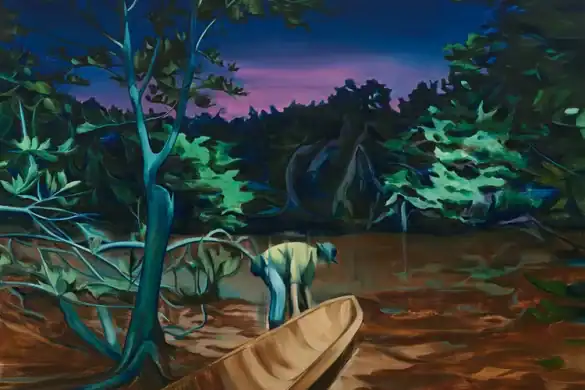
Also I have attached a selection of one of my favourite emerging artist Wang Yawei. I hope you like them.
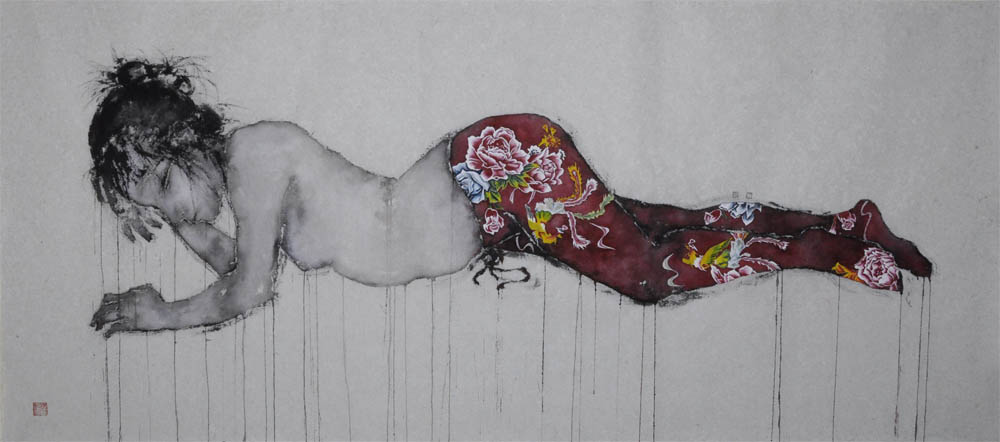


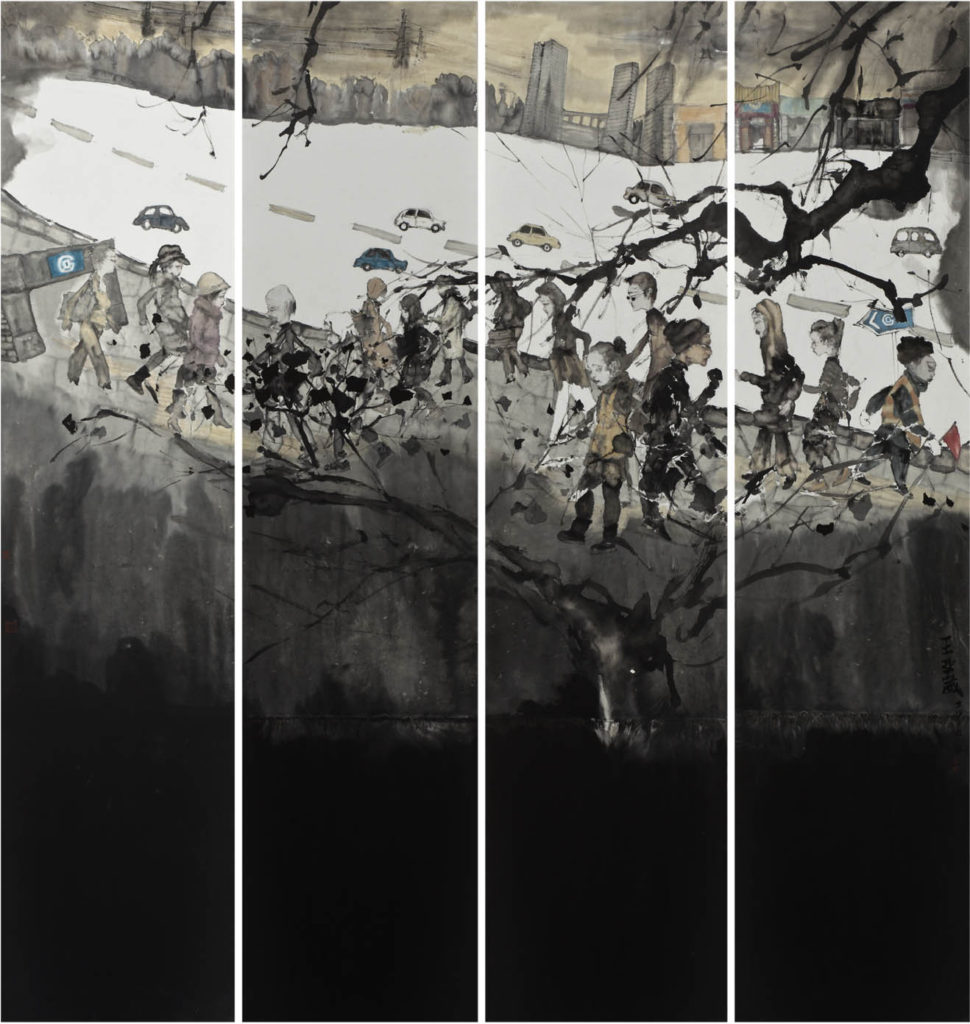
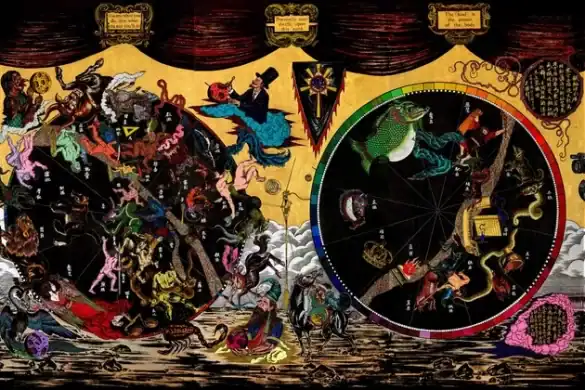
Ink wash technique isn’t confined to paper-and-brush purists, either. Artist Sun Sun for example combines traditional Chinese ink brushwork with woodcut printmaking and hand-drawn stop-motion animation, using the same graded ink tones described above to build entire animated worlds frame by frame.
Ink Wash Painting Techniques: How the Brush and Ink Work Together
The brush techniques emphasized in Chinese painting include line drawing and the stylized expressions of shade and texture. Also dotting methods are used mainly to differentiate trees and plants and for simple embellishment.
The different brush strokes give the painting rhythm and beauty and depict the subject’s outward and inner qualities. At the same time, they reveal the individuality and style of each painter himself.
In practice, most ink wash painting techniques come down to controlling two things at once: how much ink is loaded into the brush, and how much pressure and speed go into the stroke. A brush loaded mostly with water and just a touch of ink produces a pale, transparent wash, good for distant mountains or mist. The same brush dipped straight into thick ink and dragged quickly across dry paper produces feibai, or “flying white”, a broken, textured stroke used for tree bark, rock, or aged wood. Most paintings move between these extremes within a single work, wet strokes for soft, blurred elements and dry strokes for sharp detail, without the artist ever mixing a second color.
Because unsized xuan paper absorbs ink the moment the brush touches it, there is no blending or correcting a stroke afterward the way there is in oil or acrylic painting. This is why practitioners describe learning ink wash painting as learning to commit: the brush loading and the mental decision happen before the stroke, not during it.

Sumi-e vs. Chinese Ink Wash Painting
Sumi-e is the Japanese continuation of the same tradition, brought over from China roughly during the 14th century and developed further by Japanese Zen Buddhist monks and painters. The core materials, brush, ink stick, inkstone, and absorbent paper, are the same, and the two styles are often lumped together in English-language searches. The main differences are more about emphasis than method: sumi-e leans further into minimalism and Zen aesthetics, often with fewer strokes and more negative space, while Chinese ink wash painting has historically kept closer ties to landscape painting, poetry, and calligraphy as combined art forms on a single scroll. In practice, a beginner buying materials for one can use the same set for the other.
What You Need to Get Started: The Four Treasures of the Study
Ink wash painting traditionally relies on just four tools, known as the “Four Treasures of the Study” (文房四寷): a brush, ink, an inkstone, and paper. No other pigments or tools are involved, which makes it an inexpensive art form to start compared to oil or acrylic painting.
Brush: Look for a beginner set with a few sizes rather than a single brush, since ink wash relies on switching between fine line work and broad washes. A set like the Corciosy Chinese Calligraphy Brushes Set covers this range at a beginner price point.
Ink: Traditionally ground from a solid ink stick on an inkstone, which lets you control concentration precisely, though bottled liquid ink is the practical starting point for most beginners. Inkston is a specialist supplier stocking both traditional ink sticks (including the well-known Old Hu Kai Wen workshop) and inkstones if you want to try grinding your own.
Paper: Raw (生, sheng) xuan paper is the traditional surface, its fast, uncontrolled ink absorption is what produces the characteristic soft edges and bleeding of ink wash painting. Ripe (熟, shu) xuan paper is sized and absorbs less, which is more forgiving for gongbi-style work. Jackson’s Art and Inkston’s xuan paper range both stock raw and ripe sheets; silk is the traditional alternative surface but is harder for beginners to control.
A good reference book: For structured, step-by-step lessons rather than piecing technique together from videos, A Complete Guide to Chinese Brush Painting: Ink, Paper, Inspiration by Caroline and Susan Self (Tuttle Publishing) is a widely recommended beginner’s guide covering both materials and classic subjects.
Chinese Ink Wash Painting: Frequently Asked Questions
“Shui mo hua” (水墨畫) translates literally as “water-ink painting.” It refers to using black ink, diluted with water into different tones, as the sole medium – the same ink used in Chinese calligraphy.
Not exactly. Guo Hua (“national painting”) is the broader umbrella term for traditional Chinese painting on paper or silk, covering both ink-only and colored techniques. Ink wash painting is best understood as the monochrome, ink-only branch within.
The so-called “Four Treasures of the Study”: an ink stick or liquid ink, an inkstone for grinding it, a brush made from animal hair, and absorbent xuan paper or silk. No other pigments are used. See the buying guide above for specific starter recommendations.
Xieyi (“writing meaning”) is the free, spontaneous approach most associated with ink wash painting, where a few loaded brushstrokes suggest a subject rather than describe it exactly. Gongbi is the opposite: a meticulous, fine-lined, often colored style closer to realism.
Yes. A number of contemporary artists reinterpret shui mo hua for new formats — from Wang Yawei’s modern figurative ink works to Sun Xun, who combines traditional ink brushwork with woodcut printmaking and stop-motion animation.
Traditionally, no — the technique depends on how ink bleeds into and is absorbed by unsized paper or silk, an effect that doesn’t work the same way on canvas or other sealed surfaces. Some contemporary artists experiment with alternative surfaces, but this moves away from the classical definition.
They share the same origins and core materials. Sumi-e is the Japanese branch of the tradition, generally more minimalist and tied to Zen aesthetics, while Chinese ink wash painting kept closer ties to landscape, poetry, and calligraphy. The same brush, ink, and paper work for either.
Not quite, though the two get confused in English searches. Traditional Chinese ink wash painting uses only black ink in different dilutions, no pigment. “Chinese watercolor” is a Western description that sometimes refers to this same technique and sometimes to colored gongbi work, so it’s worth checking which one a source actually means.
Further Reading & Sources
- Xieyi (painting) on Wikipedia
- Gongbi on Wikipedia
- Ink and wash painting on Wikipedia
- “Ink Art: Past as Present in Contemporary China” at The Metropolitan Museum of Art
Related Reading on ChinaArtlover
More on ink and its contemporary uses: Guo Hua Painting (国画) Definition, SUN XUN: THE WOODCUT ANIMATOR and Chinese Silk Painting
Like our story about Chinese ink wash painting? Follow us on Facebook and Instagram.